
 |
Find and use your favorite today!Trail User Meeting leads to Poster SeriesAt the September 24th trail user meeting a few things became very clear. Many trail user groups have issues with, access, access, access. This means there is land, but use groups can't use it, are denied access, aren't funded to purchase it or the rules aren't clear about where and when they can use it. Many OTC members are the land managers these groups are trying to work with. However the land managers are equally frustrated by user behavior, lack of funding to police, risk exposure and other primary mandates that really, don't include trails.  It is clear that more Regional Trail Committees, and more Trail Master Plans are required. It is also clear that there is a strong role for the OTC to play between groups and land managers to secure and assure continued access. In order to best explain our relationship be tween users and our organizations we have produced an "Ontario Trails and...(Use Group)" poster series. Each member group has a page on the OTC website where OTC explains what we do, and the member explains what they do, so that people can see how we work together.  In addition it is clear that the relationship between major use groups and the Ontario Trails Council is not well understood. We have circulated the poster template to member organizations in the interest of having them add their voice to a better public understanding of their work. As the OTC continues to grow, and we work with the major use groups as they work to secure land for their activity, and as we work with land managers to promote and manage land access, the OTC wants everyone to understand we want resolution to local issues, with the regulatory and legislative changes that makes all our jobs easier, without losing sight of regulations and safety.  Know a user or trail group you'd like to have a poster for? Ask them if they are a current OTC Member. If they are we'd be happy to produce a poster for everybody to use. We are also working with Conservation Ontario, and have asked others such as Ontario Invasive Species, County Forest Managers and Ontario Parks to participate in this important public awareness campaign. For more information contact: Patrick Connor, at 613-484-1140, execdir@ontariotrails.ca |


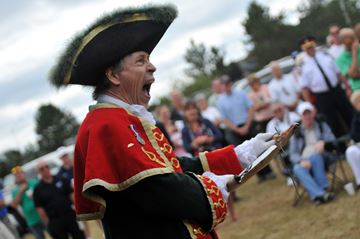


Fourteen lovers of history came together this weekend to trace the ancient route taken by French explorer Étienne Brûlé, who was the first known European to travel the Lake Ontario region with the Huron-Wendat in September 1615.
Led by Christian Bode, president of the Société d’histoire de Toronto, the group paddled and hiked roughly 65 kilometres over three days, following the Toronto Carrying-Place Trail from Holland Marsh, south of Lake Simcoe, to the Swansea neighbourhood on the east bank of the Humber River.
“Sometimes it’s lost in suburbia, sometimes it’s there, and sometimes you have to reroute,” Bode said of the trail, which is estimated to have been travelled for up to 8,000 years.
“What has impressed me is not the fact that we walked the whole way, but that everywhere we went we were welcomed sincerely.”
Bode said Brûlé’s quest into Huron-Wendat territory 400 years ago was a seminal event; the Frenchman grew familiar with the routes of the landscape and learned the aboriginals’ language, which facilitated future fur-trade excursions and the infiltration of the area by Jesuit missionaries.
Ever since, Bode said, “there has been a French presence in the province of Ontario.”
The weekend of re-enactments of Brûlé’s travels started Friday, when the group canoed the first stretch in Lake Couchiching and attended a ceremony at the Champlain Monument, named for the man who founded Quebec City in 1608 — then capital of New France — and commissioned Brûlé to help explore and chart the Great Lakes region. The group also attended the opening of a new pavilion that was dedicated to the local Ojibwa.
As Bode’s history buffs resumed their hike south of Lake Simcoe on Saturday and made their way southwest, they planted a tree in East Gwillimbury, took in a French choir performance at a Newmarket farmer’s market, lunched with the local mayor at the Aurora Armoury, unveiled a new plaque to the Carrying-Place Trail in Vaughan and finally made their way to Swansea.
The hike concluded Sunday with a celebration of francophone and aboriginal history at the Lucy Maud Montgomery Parkette on Riverside Dr., with actors dressed in the garb of the early 17th century and an unveiling of a moccasin project for the occasion by Garry Sault, an Ojibwa elder with the Mississaugas of the New Credit First Nation.


