Thursday, April 30, 2015

Ontario Trails - Trail to open July 2015, connecting Guelph and Goderich


G2G Trail To Open in July

Friday, April 24, 2015 5:09 AM by Steve Balkouras
137 km trail to connect Guelph and Goderich this summer

There is audio for this story.
MP3 - click to open click to open MP3 version
or click the play button to listen now.
(Goderich)-
Are you looking to get active and help support the community at the same time?
The Goderich to Guelph Rail Trail will be holding their fifth annual Spring on the Trail event on May 9th, 2015. 
You can register to challenge yourself, your friends or family to Bike, Hike, Run or Walk the trail. 
To register go to www.springonthetrail.ca
Registration goes until May 9th and all contributions made online will receive a full Charitable Tax Receipt. 
While sections of the rail trail are already open, the full G2G Trailway will officially open on July 1, 2015 under the guidance of the G2G Rail Trail Advisory Committee. 
Once referred to as the backbone of Ontario trails, the G2G  trail connects 13 communities with pathways running approximately 127 km. 
Over the next several years, the advisory group has plans to replace the larger bridges which will allow families of all ages to travel safely, almost completely off road.
For more information about the G2G trail, you visit their webpage at www.g2grailtrail.com or check them out on Facebook at G2G Rail Trail. 

Wednesday, April 29, 2015

Ontario Trails - Lake Simcoe Region Conservation Authority on North Gwillimbury Forest subdivision


Developer pushes Lake Simcoe Region Conservation Authority on North Gwillimbury Forest subdivision

Georgina Advocate
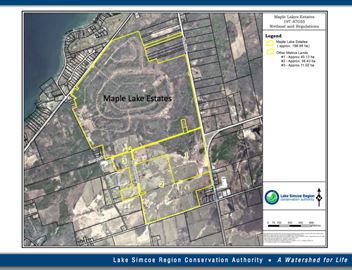
A large-scale subdivision on provincially protected wetlands in Georgina may slip through a conservation “loophole”, according to the environmental group trying to close both the hole and stop development in the North Gwillimbury Forest.
And that hole got a little wider after a major developer applied for a section 28 permit from the Lake Simcoe Region Conservation Authority last week, despite earlier assurances it wouldn’t before the end of the month. A section 28 permit is required by Metrus to proceed with construction because the regulation governs permission to straighten, change, divert or interfere with the existing channel of a river, creek, stream or watercourse or change or interfere with a wetland under the province’s conservation act.
A clause within the section states “will grant approval for development on lots within registered plans of subdivision” (which the property in question has) notwithstanding wetland designation.
A major concern underlying the turf war between Metrus Developments Inc. and the North Gwillimbury Forest Alliance over development in the environmentally protected land north of Deer Park Road in Keswick has been the possibility of a caveat to current LSRCA guidelines allowing approval for development on lots within registered plans of subdivision.
That allows housing developments with grandfathered planning approvals to be placed in areas provincially designated as significant wetlands, according to the Alliance.
And that applies to Metrus’ Maples Lakes Estate subdivision slated for a 494-acre parcel of land in the north end of Keswick, which has planning approvals dating back three decades on the subsequently deemed provincially significant wetland — a designation intended to protect it from development.
When Metrus bought the land from a bankrupt and now-defunct Bertan Investments nearly 30 years ago, it did so with the understanding that it was zoned for an approved development that includes 1,073 self-contained, pre-built units, as well as parks and other recreational complexes.
It has also paid more than $1.4 million into installing water and sanitary systems, for a combined $3.5 million being paid by the former and current owners to service the land.
But for many residents in addition to the NGFA, a lot — including environmental protections — has changed since a 1987 Ontario Municipal Board ruling in favour of the development backed by a 1988 Order in Council and a development deal inked in 1992.
And last week, despite the fact Metrus —  rebranded as the DG Group April 14 — made both verbal and written commitments to the LSRCA to not submit an application to develop, undertake or proceed with the approved plan of subdivision until April 30 to allow the LSRCA to conclude a review and update of its policies, the development giant with one of the widest portfolio of properties in the GTA and around Southern Ontario did just that.
It filed a section 28 permit application with the LSRCA Thursday.
NGFA chairperson Jack Gibbons called the move “indefensible”, said the application is a “violation” of the development company’s signed undertaking with the LSRCA and its approval would be both poor planning and not in the public interest.
“Allowing such an application would be a black eye for our region by allowing an inappropriate development to be slipped through under outdated and illegal rules,” Gibbons said.
Despite the fact that both York Region’s official plan and provincial policy make it clear that wetlands and significant woodlands within this forest are off limits for development, Metrus has been trying to transform a 30-year-old approval for a mobile home park on leased lots into a brand new approval for a private lot subdivision that would sit in the provincially significant Paradise Beach-Island Grove wetland, Gibbons added.
“That is a risk we cannot afford to take,” he said, adding the forest is 3-1/2 times the size of Vancouver’s Stanley Park and its preservation is essential for the social, ecological and economic health of the Town of Georgina and Lake Simcoe.

Tuesday, April 28, 2015

Ontario Trails - Team Hardwood-Trek Mountain Bike Development Program hits the trails for first time


Rob Fex, Special to the Packet & Times
DALE NORMAN/SUBMITTED PHOTO
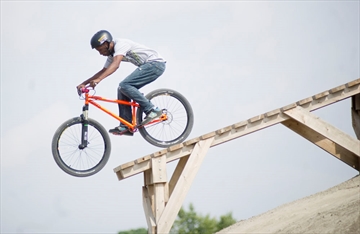
Riders in the Team Hardwood-Trek mountain-bike development program hit the trails for the first time this season on the weekend. Upcoming events at the Oro-Medonte Township facility include the launch of Wednesday-night racing and the Ontario Cup series.
DALE NORMAN/SUBMITTED PHOTO Riders in the Team Hardwood-Trek mountain-bike development program hit the trails for the first time this season on the weekend. Upcoming events at the Oro-Medonte Township facility include the launch of Wednesday-night racing and the Ontario Cup series.
This past Saturday saw the athletes from the Team Hardwood-Trek mountain-bike development program hit the trails for the first time in preparation for the 2015 season.
With only 10 days until our first Wednesday Night Race at Hardwood Ski and Bike and 14 days until the first Ontario Cup Series Race, athletes, coaches and parents were eager to rip up the trails with their friends.
You could see smiles for miles and hear laughter across the parking lot as old friends caught up with each other and the kids got the chance to meet some new friends.
The coaches for the bronze race and silver groups had a solid workout planned for the athletes to help shake off the winter cobwebs and prepare everyone for another solid season of "shredding the gnar."
There is a greater level of anticipation at Team Hardwood-Trek for the 2015 season as we will get to witness the Pan Am Games mountain-bike event being held at our home venue, Hardwood Ski and Bike, July 12.
Our athletes will get to see some the best mountain bikers in the world compete in our own back yard. What an amazing opportunity to witness one of the biggest sporting events in the world. Talk about motivation and a momentum builder for our young future champions.
Team Hardwood-Trek is on of the biggest, longest-running and most successful mountain-bike development programs in Canada. Some of the athletes who have taken part in our program include 2012 Olympian and probable 2015 Pan Am Games athlete Emily Batty, 2013 World Junior XC silver-medallist Peter Disera, 2013 Canadian XC champ Mitch Bailey and 2013 Canadian XC champ Soren Meeuwisse, to name a few.
In 2014, the Ontario Trillium Foundation recognized the amazing things Team Hardwood-Trek does to promote healthy families with a three-year, $75,800 grant.
Building off the momentum of the grant and the excitement of the Pan Am Games coming to our home turf, we will be growing again this season. We have programs for kids from six to 18 years old, from beginners to aspiring national and international racers.
And it's not to late to get in on the fun.
If you would like more information on our programs or anything else we do, email me at headcoach@teamhardwoodtrek.ca.
Rob Fex is the head coach of the Team Hardwood-Trek mountain bike development program. 

Monday, April 27, 2015

Ontario Trails - Sunnyside Bike Park Toronto Update


Phase two of Sunnyside Bike Park to finish in June

Park opens for the season mid-May

Bloor West Villager
Construction on phase two of the first-ever destination bike park in Toronto is currently underway, according to the city’s Natural Environment Trails Program.
The second phase of the Sunnyside Bike Park will include such amenities as picnic tables, a “kiss-and ride” drop-off loop, bike racks, water bottle filling stations, tree planting and a loop trail around the perimeter of the riding features.
“There have been some construction delays due to bad weather, but this phase is expected to be completed in June,” the trails program said in a statement.
The park, situated at Lakeshore Boulevard and Ellis Avenue, is set to officially open by mid-May following the completion of the loop trail and some spring maintenance on the riding features.
The Natural Environment Trails Program is planning on organizing a volunteer team to assist with the ongoing maintenance of the riding features in the park. More details about the volunteer schedule will be announced at a later date.
Sunnyside Bike Park, which officially opened in July of last year, is the first official outdoor off-road cycling facility of its size in Toronto.
The city enlisted the talents of internationally acclaimed Jay Hoots of Hoots Inc., a world leader in the design of community-based bike skill parks and trail systems. Hoots has built more than 50 projects in large city and small town environments and boasts experience developing facilities internationally.
The 5,000 square-metre park can accommodate as many as 100 riders at one time and was built to accommodate riders of all skill levels and abilities.
If you would like further details, visit www.toronto.ca/trails or email trails@toronto.ca
– Lisa Rainford

Friday, April 24, 2015

Ontario Trails - OPP and Trail Safety Ontario


Provincial News: OPP Remain Dedicated To Road, Water And Trail Safety In Ontario

Contributed by admin on Apr 17, 2015 - 10:23 AM
Picture 0 for OPP Remain Dedicated To Road, Water And Trail Safety In Ontario

From the Desk of: Chief Superintendent John Tod Regional Commander, Central Region

(ORILLIA, ON) With the current streak of warm weather in Central Ontario and temperatures forecast in the double digits next week many people will be heading outdoors to enjoy the weather after the long winter. 
The Ontario Provincial Police (OPP) would like to remind residents to be aware of open and fast moving water. As spring is upon us we will see water levels rise and become unstable due to excessive snow runoff. Rivers will be moving fast with strong currents and the water is still very cold. We should all be aware of the dangers present around rivers and open water and certainly be mindful of children who might be curious and venture too close to these dangerous areas.
Many will be anxious to get out on the waterways and the trails on these warmer days.  A good reminder to take a minute and check and make sure all of the safety equipment is on board your boat before heading out.  Taking the time to ensure personal floatation devices are readily available for everyone on board.  When they are the proper fit and in good condition it will help reduce the unnecessary loss of life on our waterways.  Do safety checks on your ATV before you ride, and wear the proper approved equipment and be in control of your off-road vehicle at all times.
In final the nice weather bring out all summer recreational activities including motor cycle and cycling activity.  A reminder to all motorists that when they are exiting driveways and other roadways to check for these smaller vehicles that are out enjoying the warmer temperatures.  Riders should also be reminded that there are still some areas of the region that have snowbanks at the corners, and mounds of sand on the roadway.  Take extra caution while out riding until the spring clean-up has been completed.   
OPP officers remain dedicated to road, water and trail safety throughout Ontario and will continue to make safety a priority during the spring season.

Thursday, April 23, 2015

Ontario Trails - Greenbelt brings Ontarians Together


The Greenbelt Brings Ontarians Together

From economic, recreational, complete communities and diverse rural areas, the Greenbelt can extend in governance how we develop and engage our local communities.
By Beatrice Ekwa Ekoko
Published April 15, 2015
The Greenbelt is this thing we have in Ontario. The west can have its Prairies, its Rockies. Quebec can take its Shield, its Appalachian mountains. We have the Greenbelt: covering the Niagara Escarpment from Niagara falls to Tobermory, the Oak Ridges Moraine, and the hundred of thousands of acres of protected countryside that wraps around the Greater Golden Horseshoe.
'Entering the Greenbelt' sign (Image Credit: Friends of the Greenbelt)
It might be the youngest, but it's the biggest, the strongest, the most protected greenbelt in the entire world-- all 1.8 million bountiful acres of it. Ontarians know this as a thing of beauty and of value.
The Greenbelt envelops us.
And yet, apart from the signs that say, "Entering the Greenbelt" on the occasional jaunt to the rural areas, we don't give it much thought.
But the 2015 review of the Greenbelt Plan (along with the three other land use plans) is bringing this expansive swath of land to everyone's attention.
And now I am envisioning it, stretching across the province, its sheltering forests filtering our air; wetlands cleaning our water, and open meadows feeding beneficial critters for the wonders they provide; soil, good rich soil for farmers; and fingers of green reaching into our urban centres - gentle reminders that the Greenbelt is here, connecting the rural to the urban.
I tell you, I'm in love with the Greenbelt. Like Gandalf in Lord of the Rings, I want to bellow, "You shall not pass!" at anyone who dares to think about diminishing it.
We eat of its fruit: fresh produce, homegrown. We drink deeply of its wines (I prefer red). We hike along its thousands of meandering trails, dip fishing poles into its creeks, take photos with our friends and families, cross country ski its rolling hills. Valley land, wetland, marsh, woodland, sand barren and savannah, tall grass prairie and fen.
Looking up through the branches of hemlock, spruce, sassafras and pine, I admire this wild beauty and marvel at the heritage systems that most of us take for granted; always forgetting that the services of its green infrastructure are worth billions of dollars - for those inclined to measure the immeasurable in money.
Many of our livelihoods depend on it. Without question, all our children's future does.
There is this ancient idea called "the common good," which refers to the benefit of all people. It's an idea that needs resuscitating.
I'm thinking the Greenbelt can do this. The Greenbelt is this common good because it's in the interest and general wellbeing of all of us, today and tomorrow as the reality of an uncertain climate future looms.
The Greenbelt brings Ontarians together. With clearly set boundaries to halt unnecessary expansion onto prime farm and ecologically sensitive lands across Ontario, we can work within these boundaries, to grow, and thrive.
It's like rural planning consultant Margaret Walton said, back in 2006 when she coordinated the development of a rural agriculture action plan for Hamilton: "I think we need to look at agricultural land as a non-renewable resource, and not as something that is urban land in waiting."
Because, you know, there is this little something we humans like to do, called eating. Can we really afford to lose any more agriculture land?
I propose that we grow the belt to areas still outside of it. I propose that the Greenbelt plan be strengthened further to impact all the decisions we make concerning our communal lives.
From economic, recreational, complete communities and diverse rural areas, the Greenbelt can extend in governance how we develop and engage our local communities. Let it be the context from which our decisions are made towards a resilient, thriving province.

Wednesday, April 22, 2015

Ontario Trails - Making City Cycling Safer


Setting Wheels in Motion: How To Make City Cycling Safer Where You Live

Posted: Updated: 
WITOPOLI
Print
"When I first moved to Toronto, I considered myself to be a cyclist, but not a cycling advocate."
It was experiences of feeling unsafe and marginalized on Toronto's chaotic streets that led Laura Pin to start volunteering with Cycle TO, a member-supported organization that advocates for a healthy, safe, cycling-friendly city for all.
Nowadays, Laura proudly identifies as a cycling advocate, serving as both the co-founder and current co-captain of the Cycle TO Ward 14 Advocacy Group, which brings together energetic, passionate community residents to promote and advocate for cycling in their community.
After successfully pushing for bike lanes to be installed in her neighborhood, Laura walks us through the step she took to make the community change happen.
Step 1: Identify the Problem
Laura notes that while her neighborhood of Parkdale/High Park "has one of the highest concentration of bike commuters in the city, it has very little infrastructure to support these cyclists." The lack of bike lanes in the area left cyclists with limited options: either battle the traffic on Queen or King, or meander through disconnected one-way neighborhood streets, sometimes against the flow of traffic. The result? Unsafe conditions that could lead to collisions.
Step 2: Understand the Problem
Laura and her Ward 14 cycling advocacy group began digging to try and understand why there were so few bike lanes in the neighborhood. They discovered that there was a municipal plan for the area that recommended a series of contraflow bike lanes (bike lanes on quiet residential streets that flow in the opposite direction of traffic), but that the plan had never been implemented.
They then turned their attention to uncovering the reasons behind the government inaction. Through meetings with staff at the City of Toronto, they learned that the city did not want to build any new contraflow bike lanes (even though several had already been instituted) because there was some ambiguous language in the Ontario Transportation Act about whether contraflow bike lanes were legal in the city.
Step 3: Show Up and Be Heard
Once they understood the root of the problem, Laura says, the advocacy group teamed up with the staff at Cycle TO and began to "talk to absolutely everyone – our city councilor, our MPP, city of Toronto staff," to discuss the importance of contraflow bike lanes in their community and to brainstorm how to make them happen. By educating and raising awareness amongst their elected officials, the group was able to build political support.
In 2014, a major opportunity arose: The Ontario Transportation Act was opened up for amendments.The Ward 14 Advocacy Group and CycleTO HQ jumped on this chance to have their voice heard. "We made sure to be at those public consultations and participate in the dialogue," Laura explained, in order to educate policy makers and push for them to clarify the language about contraflow bike lanes in the Transportation Act.
Step 4: Celebrate your Victories!
After successfully advocating for the Ontario Transportation Act to change its language to allow contraflow bike lanes in the city, the advocacy group continued to meet with municipal politicians and staff to ensure the bike lane plan was actually implemented in a timely manner. Parkdale/High Park welcomed its first contraflow bike lane into the community on Fermanagh Avenue and additional contraflow bike lanes are scheduled to be built in summer 2015.
Step 5: Reflect on Lessons Learned
Laura suggests that when it comes to meeting with elected officials and government staff, be sure to do your homework beforehand. "Confidence goes a long way. You know your stuff. Don't psyche yourself out! You have something important to say."
For anyone trying to make a change in their community, Laura recommends connecting with the local groups in your neighborhood. Most communities have resident associations and other established advocacy groups who can offer support and help navigate the system. "The most significant thing is to get organized. It’s not just about policy change; it's about building a sense of community and bringing people together."
This article was first published on the WiToPoli blog. It's part of a new WiTOPoliseries of How-To posts with women who have made change in their communities by working with (and sometimes fighting against) the institutions that make our city work. These women inspire us and remind us that though the challenges to having our voices heard are many, they are most certainly not insurmountable.

Tuesday, April 21, 2015

Ontario Trails - Relationship between cyclists and drivers Toronto


Navigating the relationship between cyclists and drivers in Toronto


WATCH ABOVE: Cyclists and Toronto Police provide some tips on how to stay safe on the road. Marianne Dimain reports.
TORONTO – As the weather gets warmer, the battle between cyclists and drivers may become more common in the city.
According to Cycle Toronto, the most up to date statistics found that cyclists were injured by a motor vehicle every six hours in Toronto, every day of the year. Often times, the incidents could have been avoided.
When it comes to making right turns, drivers should also be aware of cyclists around them.
When it comes to drivers, Toronto Police Traffic services say cars should keep a safe distance of about a metre between their vehicle and the cyclist.
“Courtesy is a key factor here whoever got to the intersection first has the right of way,” said Const. Hugh Smith.
When it comes to blocking bike lanes, its not a matter of courtesy but also the law. However, emergency vehicles as well as Wheeltrans dropping off or picking up passengers are exempt.
Cyclists are also responsible for making sure safety is top priority and means making sure they’re not weaving in and out of traffic.
“A key component of riding is to keep riding in a straight line and avoiding hazards,” said Jared Kolb of Cycle Toronto.
The same goes for navigating around cars making right turns.
“A key piece here is not to squeeze between the right turning car and the curb but instead make a left hand signal pass over to the left of the car and proceed through the intersection,” said Kolb.
Using arm signals to indicate left turns, right turns and coming to a complete stop are also important according to Cycle Toronto.
It’s simple communication, courtesy and respect that could make for a smoother season on the roads between cyclists and drivers.